Top 10 Medical Billing KPIs Every Practice Must Track for Maximum Revenue

Introduction

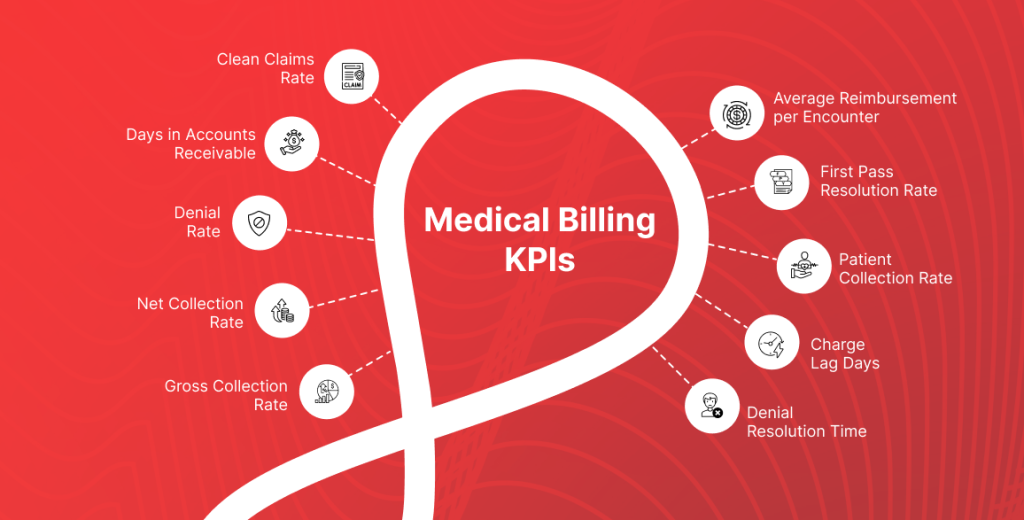
The healthcare industry is changing quickly. Today, the financial health of a practice is determined not only by the number of patients but also by the efficiency of revenue cycle management. With the transformation in medical billing, including payer guidelines, updates to coding, and increasing patient responsibility, monitoring KPIs (key performance indicators) has become more important than ever. The Clean Claim Rate, Denial Rate, First Pass Resolution Rate, and Net Collection Rate help practices measure claim accuracy, rejection frequency, first-submission success, and the percentage of revenue actually collected. Implementing an effective KPI strategy for your revenue cycle will result in a decrease in claim denials, shorter reimbursement times, and a more stable cash flow. Therefore, KPIs provide your practice with the ability to convert raw billing data into usable information to better help you expand and ensure long-term growth.

Why Medical Billing KPIs Matter

The Revenue Cycle Management process includes all financial transactions that a patient has with a provider and ranges from when they schedule their visit until final payment is made. Every step in the revenue cycle process can lead to miscalculations, delays or loss of revenue for that provider. If these problems are not tracked, they generally go undiscovered until they begin to significantly hurt the provider’s financial performance. Therefore, it is critical for today’s healthcare providers to measure KPIs during revenue cycle management processes. Industry research shows that providers who continuously measure and improve their RCM KPIs can improve their collection rates by as much as 20% and lower their denial rates compared to others in the industry.

Clean Claims Rate (CCR)

The clean claim rate is one of the most essential measures of billing effectiveness. This metric measures the percentage of claims submitted accurately and accepted as valid by the payer at first submission, without being corrected or resubmitted. Most consider 95% or above to be a good benchmark and indicates that the front end was well executed (good patient registration, verification of insurance and accurate coding). When the clean claim rate is below this benchmark, it typically indicates there are systemic reasons for delays, as well as higher costs associated with administrative work.

For example, a small internal medicine clinic with a history of claim rejections decided to implement an automated claim scrubbing system, which would allow them to identify errors in submitted claims before submitting them. The claims were researched for compliance with payer requirements. After implementing the scrubbing system and making corrections to previously submitted claims, the clean claim rate improved from 88% to 96%, resulting in quicker payments and better operational efficiency. This illustrates how an improvement in this KPI can have a substantial positive effect on revenue cycle management.

Days in Accounts Receivable(A/R)

How quickly a practice is able to receive payments after providing services can significantly impact the financial health of that practice. The number of days a claim stays open, i.e., unpaid, as measured by A/R days is an important metric in assessing how well an organization is being able to collect payments in a timely manner following the services rendered. The average days in A/R for an organization should fall within a range of approximately 30-40 days. If the days in A/R for an organization are higher than this range it results in a delay in receiving payment, which in turn negatively impacts the organization’s cash flow and creates financial instability for the organization.
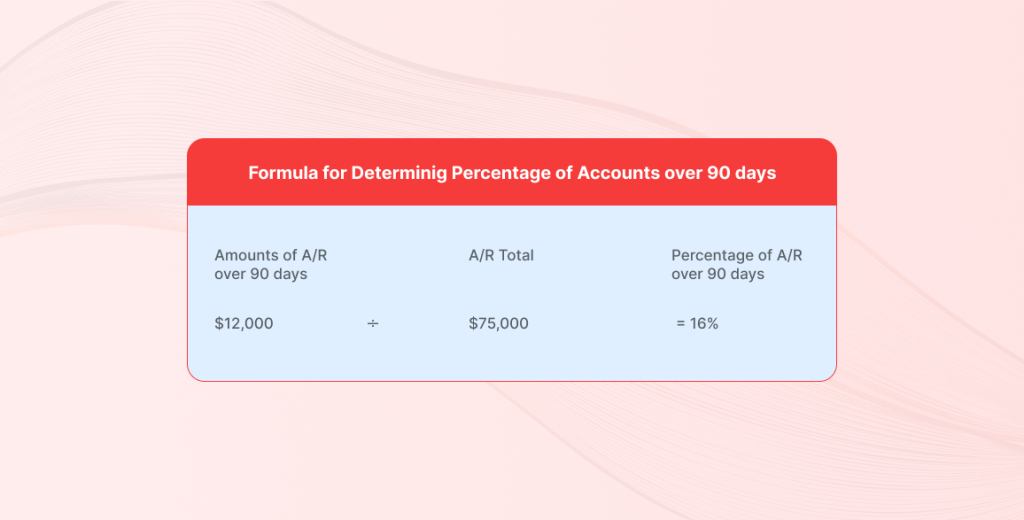
For example, an organization that offers cardiology practice was facing a late payment issue. It later decided to outsource its A/R management to an RCM service provider. Resultantly, it reduced its A/R days from 52 days to 34 days. This reduction in days in A/R helped improve the cash flow and allowed the practice to invest in its patients and its overall operations. Therefore, keeping track of the days in A/R and optimizing that number is critical to the financial health of an organization as well as receiving revenue in a timely manner.

Denial Rate

Claims denial indicates a claim rejection by a payer; hence, it is a key revenue cycle efficiency measure. The general expectation for denial percentage is to be less than 5 to 10 percent; therefore, a higher percentage of denied claims indicates issues with coding, documentation completion, or eligibility verification. Denied claims have negative impacts on both cash flow and work volume for the staff. Denial rate can be minimized by analyzing denied claim patterns (e.g., using a software program) and addressing the root cause(s) of denials.

Net Collection Rate (NCR)

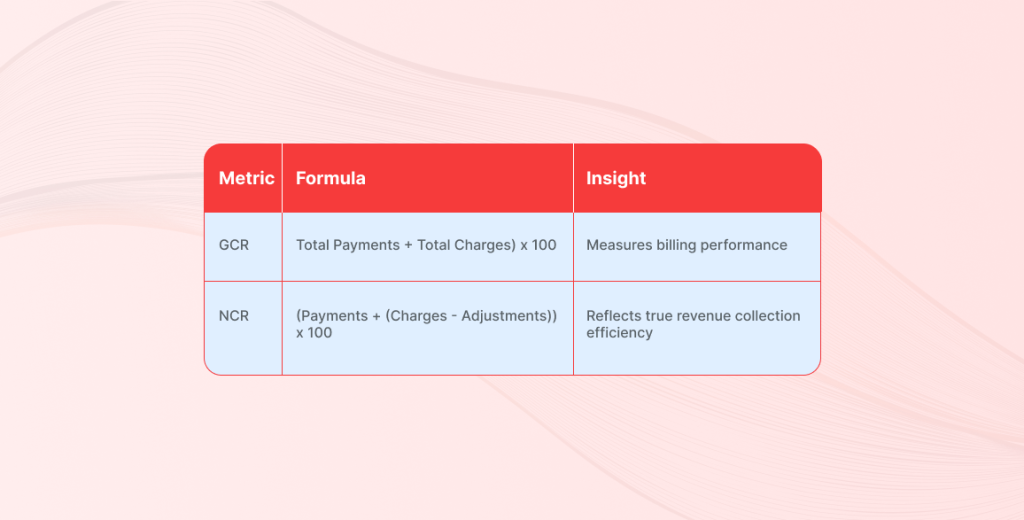
Essentially, the Net Collection Rate is used to evaluate how well a practice collects the revenue it has been contracted to receive after accounting for any adjustments, such as payer discounts. If a practice has an NCR above 95%, it is generally believed that the practice is good at managing collections and minimizing revenue loss. Conversely, if a practice has a low NCR, it may be indicative of issues such as poor follow-up on unpaid claims, underpayments from payors, or ineffective billing processes.

For example, one multi-specialty practice found that a portion of the revenue it expected to collect from payors was being lost because of underpayments that were overlooked by the practice. After implementing a structured follow-up process and utilizing analytics to monitor and audit payment discrepancies, the practice was able to increase its NCR significantly. Due to its significant role in financial performance, it is considered one of the most important KPIs for any practice that is looking to maximize revenue cycle results.

Gross Collection Rate (GCR)

The gross collection rate is an overall indication of how well a practice can collect payments compared to the total amount of charges billed. While it does not include collections from contract adjustments, it allows the practice to have a high-level view of the overall billing efficiency of the practice. A GCR between 85% – 95% is considered to be within the normal range because it contains amounts that may never be recoverable due to payer agreements.


Practices that routinely review their gross collection rate will be able to identify trends in revenue growth and identify potential issues in their billing process. For example, an abrupt drop in the GCR may imply that claims are being increasingly rejected or that payments are being delayed. By reviewing such trends, practices can implement corrective measures to ensure a steady flow of revenue into their practice.
FPRR (First Pass Resolution Rate)

First Pass Resolution Rate measures the percentage of claims that are completed with regard to processing and timely payment. FPRR, as a key performance indicator (KPI), is directly associated with both clean claim rate and denial rate; as such, FPRR provides insight into the overall efficiency of the billing process. High FPRR has traditionally been defined as being greater than eighty-five percent (>85%), which denotes that claims are being submitted correctly and processed seamlessly by payers.

Patient Collection Rate

As patients are required to pay more of their medical costs due to high-deductible health plans and the increase in patient responsibility for out-of-pocket costs, patient collections rates have become a very important metric for determining how well a practice collects from the patient for co-pays, deductibles, and outstanding balances. The proportion of total revenue generated by patient payments is a significant component of healthcare facilities’ overall revenues. Therefore, practices should optimize their collection practices to increase total practice revenue.

Average Reimbursement per Encounter

Average Reimbursement Per Encounter (KPI) enables you to know how much revenue is generated during each patient visit. This provides insight into the accuracy of billing and the performance of your payers. Average reimbursement per encounter is a KPI that can be utilized to determine issues such as mismatched coding, missed charges, or unfavorable payer contracts. For example, an orthopedic clinic completed an audit of its billing procedures and discovered that there were many instances of coding done incorrectly. When the clinic corrected the coding and updated it, it raised its average reimbursement by 15%. By monitoring their Average reimbursement per encounter KPI, practices can be assured that they are capturing the total value of their services and maximizing their revenue opportunities.

Charge Lag Days

Charge-lag-days is an indicator of the duration of time between providing services and submitting claims related to those services for reimbursement. As a target, you want your lag days to be as short as possible (1-3 days). Delays in the entry of charges will significantly slow down the revenue cycle, delay reimbursement, and impact cash flow.
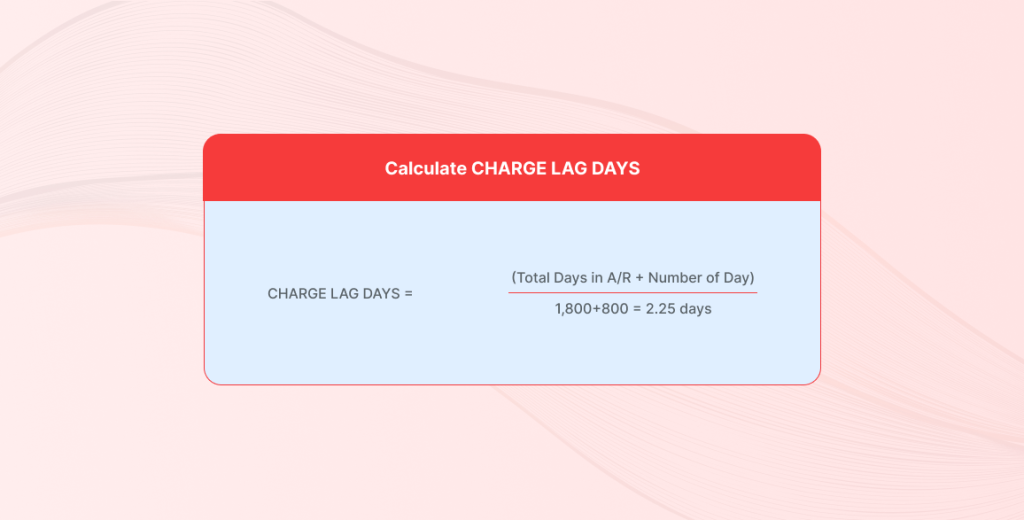
For instance, one department at a hospital has documentation and coding delays that caused it to have a days-lag of more than a week; thus, there were delayed payments received. By improving the workflow between the clinical and billing departments, this department was able to decrease its days lag charge and expedite collection of its revenue.

Denial Resolution Time

The time to resolve denial shows you how quickly denied claims are reviewed/revised/resubmitted for payment. This is a very important metric for getting back lost income due to denied claims, helping reduce overall financial shock. High-performing organizations typically resolve denied claims in 7 to 10 days so that they do not experience delays in receiving payments.

One example is a healthcare organization that created a team solely focused on resolving rejected claims; this led to a great deal of improvement in resolution times and overall increased collections. This will allow the practice to make sure they are addressing their denied claims as quickly as possible and not letting them become a permanent loss of revenue.

Common Mistakes Practices Make

KPIs are important, but many different types do not capitalize on them due to common errors, such as implementing metrics without any analysis of the trend or any type of remedial action. Many practices try to focus on too many KPIs at one time, creating uncertainty and confusion. Multiple KPIs can also be used to demonstrate an ongoing issue (for example, denials) that requires re-examination before they create a remaining problem that influences their revenue. Internal communications between the clinical side of practice and the billing department create an additional common barrier to successfully using KPIs in a manner that will maximize their effectiveness (e.g., improper documentation and/or incorrect coding). Practices need to be committed to a data-driven continuous improvement/re-engineering strategy for implementing KPIs to maximize the value of KPI tracking.

How to Improve Revenue Cycle Performance

For an organization to enhance the performance of its revenue cycle, it requires a combination of technology, labor skill, and proactive management behavior, allowing them to perform respective roles successfully. Automating the processes of verifying insurance eligibility, submitting claims, and tracking payment postings reduces the number of errors made in performing those duties and increases the speed at which each task can be completed. By conducting regular audits, organizations can find inaccuracies in coding or compliance, while continuously providing education to their employees will enable them to stay up to date on current developments in their industry. Organizations also outsource a lot of their RCM responsibilities to companies that specialize in those services and have the expertise as well as the ability to provide both high levels of service quality and efficiency. Finally, if organizations use these strategies together with an effective process of measuring KPIs, they can achieve significant improvements in both their financial and operational performance.

Final Thoughts

Tracking and optimizing medical billing KPIs is essential for any healthcare practice aiming to strengthen financial performance and streamline operations. These RCM metrics offer clear visibility into each stage of the revenue cycle, helping practices uncover inefficiencies, minimize denials, and accelerate reimbursements. By consistently monitoring the right indicators and taking timely corrective actions, healthcare providers can improve cash flow, enhance operational efficiency, and build a more stable and profitable practice.

If you are looking for how medical billing KPIs can be achieved successfully, Onfinio provides the solution with proven efficiency, a strong track record, and data-driven expertise. From accurate claim management to proactive denial reduction and performance tracking, Onfinio ensures your revenue cycle operates smoothly while maximizing your financial outcomes.


 

The Complete Guide to Ophthalmology Medical Billing

Introduction

Ophthalmology is a highly complex and technologically advanced area of healthcare, especially in the billing context. Whether it is a diagnostic test, a medical eye exam, a surgical procedure, or post-operative care, each service must be coded, documented, and billed correctly. If there is one error during billing, there could be a delay in payment, a denial of claim, or even loss of revenue.

This Ophthalmology Medical Billing guide presents a straightforward and practical overview of ophthalmology medical billing services, distinguished features, and how specialized billing support can improve the financial viability of eye-care practices.

Understanding Ophthalmology Medical Billing

Ophthalmology medical billing is the process of translating eye-care services into standardized medical codes, submitting claims to payers, and managing reimbursements throughout the revenue cycle.

What makes this specialty unique is its overlap between medical treatment and vision care, combined with a high volume of diagnostic testing and surgical interventions.

While Billing for Ophthalmology:

– You must demonstrate that medical necessity for eye-related conditions is important

– There are limits to how many times a given test can be done

– There are various requirements for the timing of when the test can be billed

– Each payer may provide different standardized documentation

Due to the higher complexity of Ophthalmology billing compared to traditional medical billing, the success ratio in Ophthalmology billing is greater than that of traditional medical billing.

Primary Ophthalmology CPT Code Categories

Category Name Code Description
Eye Exam Codes Comprehensive eye exams
Diagnostic Testing Advanced eye diagnostics
Procedures and Surgeries Surgical eye treatments

Why is Billing for Ophthalmology More Complicated?

Although the majority of ophthalmology practices have large volumes of patients, they fail to remain profitable due to inefficiencies in their billing practices. In fact, most ophthalmology practices do not have an adequate volume of billing activity, but rather have well-established policies and procedures for billing.

The following are examples of the more typical challenges faced by Ophthalmology billing:

1. Medical vs. Vision Insurance Cross-Over Confusion

Ophthalmology billing can be either billed under medical or vision insurance or both. Therefore, it is very common for practitioners to either incorrectly file a claim with the wrong payer or file a claim with both payers simultaneously.

2. Limited Understanding of Diagnostic Testing

Some of the Ophthalmology diagnostic tests, such as Optical Coherence Tomography (OCT) and Visual Fields (VF), require specific diagnostic codes that many ophthalmologists do not have enough understanding of how to use. This also causes confusion and delays in processing claims.

3. Complex Surgical Billing

Cataract surgery, glaucoma procedures, and retinal injections all require correct usage for global periods, modifiers, and post-operative billing.

4. Frequent Regulatory Updates

Coding Guidelines (ICD-10-CM), payer policies, and reimbursement guidelines are continually changing, so the ophthalmology practice must have a coding expert available on a continual basis for compliance.

Because of these issues, medical billing services for Ophthalmology are not an option but a necessity for most practices.

What Do Ophthalmology Medical Billing Services Include?

This type of billing service provides complete management of every aspect of the revenue cycle, ensuring complete accuracy, compliance with government regulations, and continual cash flow.

Complete Revenue Cycle Management

Billing service staff will oversee all phases of your billing process from initial patient registration to final payment reconciliation. By doing so, your practice may reduce delays and/or loss of revenue due to incorrect billing procedures.

Specialty-Specific Coding Accuracy

To ensure accurate coding based on CPT, ICD-10, and modifier combinations for your specialty, your billing service will assign the correct codes. Each bill will contain the same codes that your practice submits to the various payers.

Eligibility & Benefit Verification

By verifying eligibility and benefits with your practice before services are delivered, patients will reduce their disputing of services rendered, and the collection rate will increase.

Denial Analysis & Revenue Recovery

Once a claim has been denied, it will be reviewed, corrected, and resubmitted to the payer as quickly as possible. Denied claims give you the ability to see and understand trends and to create a plan that can prevent similar denied claims from occurring.

Compliance & Audit Readiness

As long as documentation and coding match properly and accurately, your practice can reduce the risk of being audited, fined, or found non-compliant.

Real-World Examples of Ophthalmology Billing

These are examples of how ophthalmology practices have billed for services:

Example 1: Comprehensive Eye Exam

A patient presents with a complaint of blurred vision. The provider conducts a comprehensive eye examination and bills the appropriate CPT code with a medical necessity provided by a diagnosis.

Example 2: Diagnostic Imaging (OCT)

The practice performed a test utilizing optical coherence tomography (OCT) for the purpose of monitoring the patient’s glaucoma progression (in this example). The practice built a medical necessity justification for the service and submitted appropriate documentation to support the medical necessity of performing the OCT (to help prevent payers from denying this claim) and documenting the results of OCT for medical necessity.

Example 3: Cataract Surgery Billing

The patient has undergone cataract extraction and the procedure was billed appropriately using the appropriate CPT code(s), appropriate modifiers, and in accordance with global period rules in order to receive full and accurate reimbursement.

How Specialized Billing Improves Practice Performance

Overall, specialized ophthalmic medical billing services help improve the revenue cycle by providing measurable benefits beyond the typical submission of claims to payers.

Improved Cash Flow

<pid=”bg1″>When claim errors are reduced, clean claims produce faster payments, which will lead to predictable revenue, allowing for better financial planning.

Decreased Operational Burdens

By outsourcing administrative duties related to submitting claims, staff members will not be burdened with a large volume of administrative duties and will be able to spend more time providing quality care to patients and improving patient satisfaction.

Lower Denial Rates

Additionally, specialized expertise reduces the potential for errors associated with modifiers, documentation gaps, and compliance with payer policies.

Grow Your Practice

The Practice can grow or open new locations without having to hire additional administrative support or create added stress on the staff.

Choosing the Right Ophthalmology Billing Partner

When selecting a billing partner, ophthalmology practices should prioritize:

  • Proven experience in ophthalmology billing
  • Transparent reporting and performance metrics
  • Strong denial management capabilities
  • Compliance-focused workflows
  • Scalable services aligned with practice growth

A billing partner should function as a revenue ally, not just a claims processor.

Final Thoughts

Ophthalmology practices operate at the intersection of precision medicine and complex reimbursement models. Without expert billing support, even the most successful clinics can experience revenue loss and administrative strain.

Investing in professional ophthalmology medical billing services transforms billing from a reactive task into a strategic asset — improving cash flow, reducing risk, and supporting long-term growth.

For eye care providers aiming to stay financially strong in a competitive healthcare environment, specialized billing expertise is no longer optional — it’s essential.

If you want to improve ophthalmological medical billing and enhance quality and revenue, Onfinio is the best choice for you. Its ophthalmological medical billing services are driven by quality, excellence, and standardized services.

In-House vs Outsourced Medical Billing: Which Is Right for You?

Introduction

Effective management of medical billing is complicated because there are so many contributing factors involved. It impacts cash flow, compliance, workload, and patient satisfaction. Healthcare providers are now confronted with an extremely important decision about how best to manage the billing process: doing it themselves (internally) with their own staff, or outsourcing medical billing to professionals.

This blog outlines both options, providing a full picture of the pros and cons associated with each model, helping you decide on which can best provide for scaling up, revenue growth, and general operational efficiency.

Understanding the Core Challenge in Medical Billing

Today, the medical billing process is much more intricate than merely completing a claim and submitting it. Practices must deal with numerous claims being submitted. These must have the ability to respond rapidly to payer requests and to denial issues and be knowledgeable about current coding and compliance standards.

Moreover, these must address each practice’s ever-increasing number of administrative obligations. Failure to efficiently address these challenges creates additional delayed payments, increased denial rates for the practice, increased levels of employee dissatisfaction, and the potential loss of the practice’s revenue.

In-House Medical Billing: Working and Limitations

How In-House Billing Works

In-house billing allows providers to hire and manage staff for billing inside their own practice, use their own software, carry out compliance training, monitor for compliance updates, and follow up on claims themselves.

Shortcomings of In-House Billing

While in-house billing provides the best level of control of billing operations, it can create limitations when practices begin to expand. It can be inadequate to meet volumes of claims that exist during peak business cycles. Also, the practice has a minimum opportunity to respond quickly to payer denials and requests for information due to limited staff resources.

Finally, the operational costs associated with in-house billing, such as staffing, benefits, software licensing, and training, continue to grow as the practice grows, making it difficult for the practice to hire additional staff in order to continue to expand. Compliance varies consistently as compliance requirements are updated from both payers and from various states. Therefore, in-house billing generally becomes a less manageable process for a practice when the scope of practice gets large.

In-House vs Outsourced Medical Billing: Clear Comparison

Factor In-House Billing Outsourced Medical Billing
Claim Volume Capacity Limited High
Response Time Slower Immediate
Scalability Requires hiring Instant
Operational Cost High Lower
Denial Rate Variable Reduced
Compliance Handling Variable Reduced
Focus on Patient Care Reduced Improved

Why You Should Choose Outsourced Medical Billing Over In-House Billing

Outsourcing your medical billing means that you are working with an outside billing company that has the expertise to manage your revenue cycle through expert coders, dedicated teams, and the latest technology. Here are some reasons why you should choose outsourced billing over in-house billing:

1. Better Handling of High Claim Volumes

Outsourced billing companies have the structure to efficiently process a significant number of medical claims throughout the year, including seasonal peaks or growth spikes. They have the resources in place to continue servicing clients without a decline in service.

2. Instant Responses to Prevent Delays

With professional billing services, you can be assured of receiving immediate responses to urgent or time-sensitive issues associated with your medical claims. Professional billing services will always provide proactive follow-ups on a claim’s status and keep you up to date with real-time notifications of rejections, requests for missing supporting documentation, and denials of your claims.

By responding rapidly to inquiries, the number of claim denials and additional resubmission cycles becomes greatly diminished. As a result, your practice will benefit from improved cash flow and less disruption in revenue.

3. Scalable Support Without Increasing Headcount

Outsourcing medical billing supports you when you want to grow your practice without increasing your employee headcount. By doing this, you will be able to focus your efforts on providing your patients with the best care possible while minimizing the administrative burden associated with billing.

4. Significant Cost Reduction

The expense of outsourcing your medical billing will save you money on many significant overhead costs that would otherwise be incurred, including employee salaries and benefit costs, continuing training and certification expenses, billing software licensing, and ongoing technology upgrade costs. The organization will be able to control operational costs much more effectively when outsourcing billing, thereby providing you with a more cost-efficient and financially sustainable alternative to in-house medical billing staff and technology.

5. Revenue Growth Through Expertise and Technology

One of the biggest benefits of outsourcing your medical billing is how it directly impacts your medical billing revenue. Outsourcing is beneficial to your medical billing revenue.

  • Fewer Denials: It helps minimize claim denials, leading to revenue growth.
  • More Rapid Payments: It enhances revenue by decreasing lag time between filing claims and receiving payment through proactive claims follow-up.
  • The best coders: The coders on your outsourced billing team will always be up-to-date on current CPT, ICD, and Payer rules.
  • The best billing technology: The billing technology your outsourced billing company uses will give them the ability to identify and correct billing errors prior to submission of any claims, thereby resulting in cleaner claims, improved turn-around-time for reimbursement of claims, and decreased revenue leakage.

6.Reduced Administrative Burden on Your Practice

Billing can be incredibly time-consuming for front-desk staff, clinicians, and administrators. By outsourcing your billing operation to a third party, you can shift all the focus on eligibility verification, coding/charge posting, submission and tracking of claims, management and appeal of denied claims, as well as posting payments and reporting, to an external partner. As a result, your internal team is able to be more efficient and concentrate solely on patient care, without regular disruption from billing-related duties.

7. Increased Compliance and Risk Management

The compliance requirements associated with medical billing are extremely complicated and constantly changing, making it exceedingly difficult for in-house staff to keep up with the constant changes in regulations. Many billing outsourcing companies focus solely on compliance through their extensive knowledge of HIPAA compliance standards, payer-specific billing and documentation requirements, as well as keeping their clients informed of any changes that may affect compliance through ongoing regulatory updates and audits.

8.Better Focus on Patient Care and Satisfaction

Providers are able to spend less time on administrative responsibilities when billing processes operate smoothly. As a result, the staff is less likely to experience burnout, and patients are less likely to experience errors and delays in billing. The improved operational efficiency that results from this, along with the improved overall experience of the patient, will yield higher levels of satisfaction, increased trust, and provide pathways for long-term growth for the practice.

Final Verdict: Which Option Is Right for You?

If you have high volumes of claims, long payment cycles, many denials, expanded payrolls, or are looking to further your growth without expansion of operational staff, outsourcing your medical billing will often be your best option. It will minimize the administrative burden, cost, and complexity; however, it will maximize revenue, performance, and billing efficiency.

If you are planning to outsource the medical billing services, Onfino’s billing services offer you a way out. By partnering with a trustworthy company like Onfinio, you can expect to increase efficiencies, be compliant with regulations, increase revenue, and concentrate on providing exceptional patient care.

Mastering medical billing: key strategies for success

Medical billing is the backbone of any healthcare practice. It ensures that providers are compensated for their services and that patients’ insurance claims are processed correctly and efficiently. However, mastering medical billing requires more than just basic knowledge — it demands strategic planning, attention to detail, and the use of technology. Let’s break down the key strategies for mastering medical billing and optimizing your revenue cycle.

Understand the Medical Billing Process

The first step to mastering medical billing is to thoroughly understand the process. It typically involves the following steps:

Patient Registration: Collecting and verifying patient information, including insurance details.

Charge Entry: Recording services provided and their corresponding codes.

Claim Submission: Submitting claims to insurance companies for payment.

Payment Posting: Recording payments received from payers.

Denial Management: Handling denied claims and resubmitting them with necessary corrections.

A clear grasp of this process allows billing specialists to identify bottlenecks and streamline workflows.

Ensure Accurate Patient Information

One of the most common causes of claim denials is inaccurate patient information. A single error — like a misspelled name, wrong date of birth, or invalid insurance ID — can result in claim rejection. To prevent this:

  • Double-check all patient details during registration.
  • Train staff to collect and confirm insurance information accurately.
  • Use electronic health record (EHR) systems to minimize human error.

Master Medical Coding

Medical coding errors are another major cause of claim denials. Proper coding ensures that services are billed correctly. Key tips include:

  • Staying updated with ICD-10, CPT, and HCPCS codes.
  • Regularly training staff on coding guidelines.
  • Utilizing automated coding tools to reduce manual mistakes.

Implement a Robust Claim Scrubbing Process

Claim scrubbing involves reviewing claims for errors before submission. Investing in a robust claim scrubbing system helps:

  • Identify errors like mismatched codes or incomplete information.
  • Reduce claim rejection rates.
  • Speed up payment processing.

Monitor Denied Claims Closely

Denied claims can severely impact revenue. To effectively manage denials:

  • Categorize denials to identify recurring issues.
  • Set a process for quick appeal submissions.
  • Track denial trends and address underlying causes.

Leverage Technology for Billing Automation

Technology plays a crucial role in modern medical billing. Implementing billing software can:

  • Automate claim submissions and follow-ups.
  • Generate real-time reports for financial insights.
  • Reduce manual errors and save time.

Train and Educate Your Team

Your billing team is your greatest asset. Ensure they are equipped with the right skills by:

  • Conducting regular training on new billing regulations.
  • Offering workshops on coding updates and payer rules.
  • Encouraging certifications like Certified Professional Biller (CPB).
Partner with a Professional Medical Billing Service

Outsourcing medical billing to a trusted partner like Onfinio Medical Billing LLC can greatly enhance efficiency. Our team of experts ensures accurate claim submissions, minimizes denials, and optimizes revenue cycles — allowing healthcare providers to focus on patient care.

Conclusion

Mastering medical billing is a continuous process that combines knowledge, technology, and strategy. By understanding the billing process, eliminating errors, leveraging technology, and partnering with experts, healthcare providers can maximize their revenue and streamline operations. At Onfinio Medical Billing LLC, we are committed to helping you achieve billing excellence.

Contact us today to learn how we can transform your medical billing process!