Top 10 Medical Billing KPIs Every Practice Must Track for Maximum Revenue

Introduction

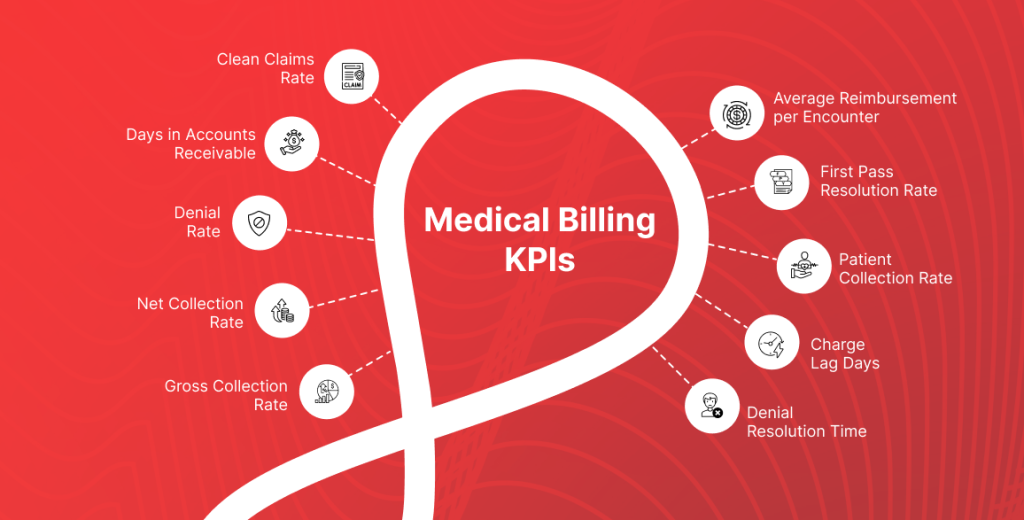
The healthcare industry is changing quickly. Today, the financial health of a practice is determined not only by the number of patients but also by the efficiency of revenue cycle management. With the transformation in medical billing, including payer guidelines, updates to coding, and increasing patient responsibility, monitoring KPIs (key performance indicators) has become more important than ever. The Clean Claim Rate, Denial Rate, First Pass Resolution Rate, and Net Collection Rate help practices measure claim accuracy, rejection frequency, first-submission success, and the percentage of revenue actually collected. Implementing an effective KPI strategy for your revenue cycle will result in a decrease in claim denials, shorter reimbursement times, and a more stable cash flow. Therefore, KPIs provide your practice with the ability to convert raw billing data into usable information to better help you expand and ensure long-term growth.

Why Medical Billing KPIs Matter

The Revenue Cycle Management process includes all financial transactions that a patient has with a provider and ranges from when they schedule their visit until final payment is made. Every step in the revenue cycle process can lead to miscalculations, delays or loss of revenue for that provider. If these problems are not tracked, they generally go undiscovered until they begin to significantly hurt the provider’s financial performance. Therefore, it is critical for today’s healthcare providers to measure KPIs during revenue cycle management processes. Industry research shows that providers who continuously measure and improve their RCM KPIs can improve their collection rates by as much as 20% and lower their denial rates compared to others in the industry.

Clean Claims Rate (CCR)

The clean claim rate is one of the most essential measures of billing effectiveness. This metric measures the percentage of claims submitted accurately and accepted as valid by the payer at first submission, without being corrected or resubmitted. Most consider 95% or above to be a good benchmark and indicates that the front end was well executed (good patient registration, verification of insurance and accurate coding). When the clean claim rate is below this benchmark, it typically indicates there are systemic reasons for delays, as well as higher costs associated with administrative work.

For example, a small internal medicine clinic with a history of claim rejections decided to implement an automated claim scrubbing system, which would allow them to identify errors in submitted claims before submitting them. The claims were researched for compliance with payer requirements. After implementing the scrubbing system and making corrections to previously submitted claims, the clean claim rate improved from 88% to 96%, resulting in quicker payments and better operational efficiency. This illustrates how an improvement in this KPI can have a substantial positive effect on revenue cycle management.

Days in Accounts Receivable(A/R)

How quickly a practice is able to receive payments after providing services can significantly impact the financial health of that practice. The number of days a claim stays open, i.e., unpaid, as measured by A/R days is an important metric in assessing how well an organization is being able to collect payments in a timely manner following the services rendered. The average days in A/R for an organization should fall within a range of approximately 30-40 days. If the days in A/R for an organization are higher than this range it results in a delay in receiving payment, which in turn negatively impacts the organization’s cash flow and creates financial instability for the organization.
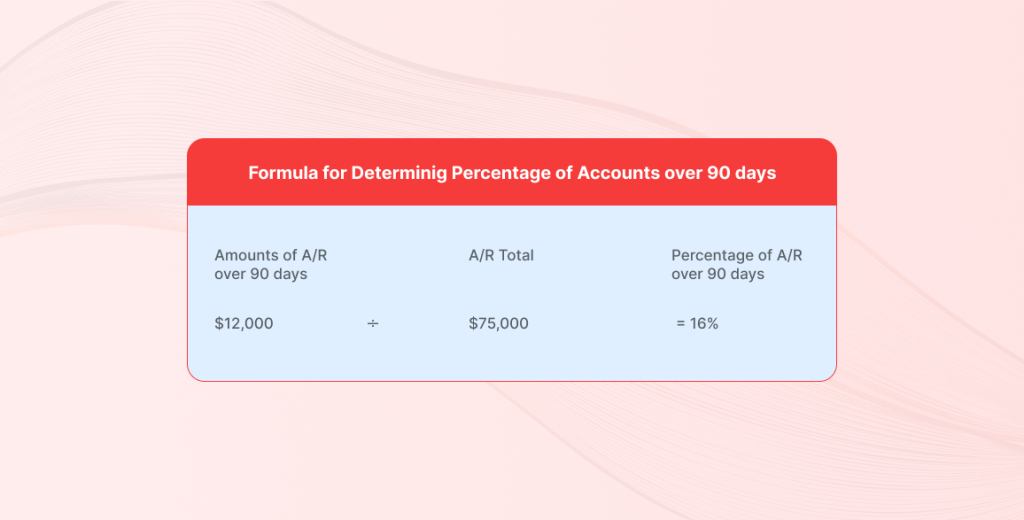
For example, an organization that offers cardiology practice was facing a late payment issue. It later decided to outsource its A/R management to an RCM service provider. Resultantly, it reduced its A/R days from 52 days to 34 days. This reduction in days in A/R helped improve the cash flow and allowed the practice to invest in its patients and its overall operations. Therefore, keeping track of the days in A/R and optimizing that number is critical to the financial health of an organization as well as receiving revenue in a timely manner.

Denial Rate

Claims denial indicates a claim rejection by a payer; hence, it is a key revenue cycle efficiency measure. The general expectation for denial percentage is to be less than 5 to 10 percent; therefore, a higher percentage of denied claims indicates issues with coding, documentation completion, or eligibility verification. Denied claims have negative impacts on both cash flow and work volume for the staff. Denial rate can be minimized by analyzing denied claim patterns (e.g., using a software program) and addressing the root cause(s) of denials.

Net Collection Rate (NCR)

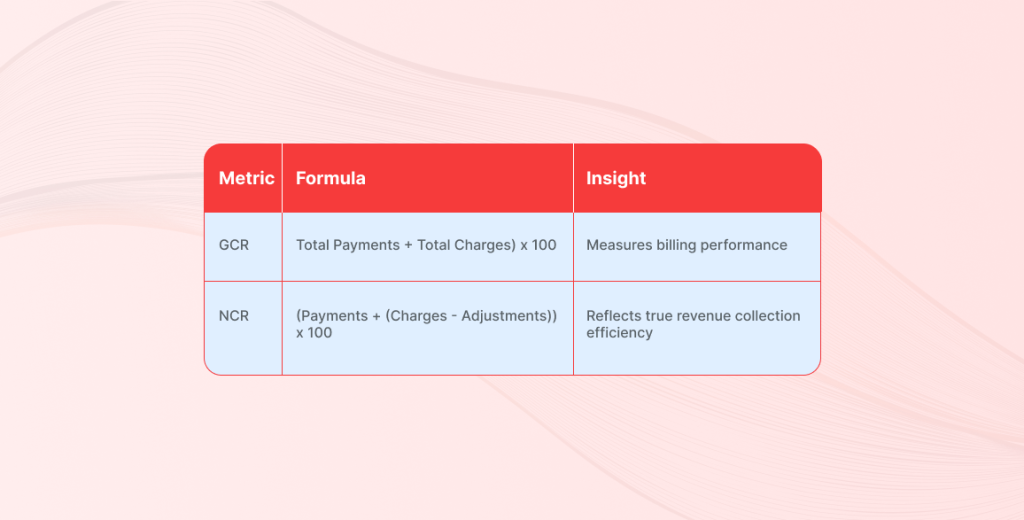
Essentially, the Net Collection Rate is used to evaluate how well a practice collects the revenue it has been contracted to receive after accounting for any adjustments, such as payer discounts. If a practice has an NCR above 95%, it is generally believed that the practice is good at managing collections and minimizing revenue loss. Conversely, if a practice has a low NCR, it may be indicative of issues such as poor follow-up on unpaid claims, underpayments from payors, or ineffective billing processes.

For example, one multi-specialty practice found that a portion of the revenue it expected to collect from payors was being lost because of underpayments that were overlooked by the practice. After implementing a structured follow-up process and utilizing analytics to monitor and audit payment discrepancies, the practice was able to increase its NCR significantly. Due to its significant role in financial performance, it is considered one of the most important KPIs for any practice that is looking to maximize revenue cycle results.

Gross Collection Rate (GCR)

The gross collection rate is an overall indication of how well a practice can collect payments compared to the total amount of charges billed. While it does not include collections from contract adjustments, it allows the practice to have a high-level view of the overall billing efficiency of the practice. A GCR between 85% – 95% is considered to be within the normal range because it contains amounts that may never be recoverable due to payer agreements.


Practices that routinely review their gross collection rate will be able to identify trends in revenue growth and identify potential issues in their billing process. For example, an abrupt drop in the GCR may imply that claims are being increasingly rejected or that payments are being delayed. By reviewing such trends, practices can implement corrective measures to ensure a steady flow of revenue into their practice.
FPRR (First Pass Resolution Rate)

First Pass Resolution Rate measures the percentage of claims that are completed with regard to processing and timely payment. FPRR, as a key performance indicator (KPI), is directly associated with both clean claim rate and denial rate; as such, FPRR provides insight into the overall efficiency of the billing process. High FPRR has traditionally been defined as being greater than eighty-five percent (>85%), which denotes that claims are being submitted correctly and processed seamlessly by payers.

Patient Collection Rate

As patients are required to pay more of their medical costs due to high-deductible health plans and the increase in patient responsibility for out-of-pocket costs, patient collections rates have become a very important metric for determining how well a practice collects from the patient for co-pays, deductibles, and outstanding balances. The proportion of total revenue generated by patient payments is a significant component of healthcare facilities’ overall revenues. Therefore, practices should optimize their collection practices to increase total practice revenue.

Average Reimbursement per Encounter

Average Reimbursement Per Encounter (KPI) enables you to know how much revenue is generated during each patient visit. This provides insight into the accuracy of billing and the performance of your payers. Average reimbursement per encounter is a KPI that can be utilized to determine issues such as mismatched coding, missed charges, or unfavorable payer contracts. For example, an orthopedic clinic completed an audit of its billing procedures and discovered that there were many instances of coding done incorrectly. When the clinic corrected the coding and updated it, it raised its average reimbursement by 15%. By monitoring their Average reimbursement per encounter KPI, practices can be assured that they are capturing the total value of their services and maximizing their revenue opportunities.

Charge Lag Days

Charge-lag-days is an indicator of the duration of time between providing services and submitting claims related to those services for reimbursement. As a target, you want your lag days to be as short as possible (1-3 days). Delays in the entry of charges will significantly slow down the revenue cycle, delay reimbursement, and impact cash flow.

For instance, one department at a hospital has documentation and coding delays that caused it to have a days-lag of more than a week; thus, there were delayed payments received. By improving the workflow between the clinical and billing departments, this department was able to decrease its days lag charge and expedite collection of its revenue.

Denial Resolution Time

The time to resolve denial shows you how quickly denied claims are reviewed/revised/resubmitted for payment. This is a very important metric for getting back lost income due to denied claims, helping reduce overall financial shock. High-performing organizations typically resolve denied claims in 7 to 10 days so that they do not experience delays in receiving payments.

One example is a healthcare organization that created a team solely focused on resolving rejected claims; this led to a great deal of improvement in resolution times and overall increased collections. This will allow the practice to make sure they are addressing their denied claims as quickly as possible and not letting them become a permanent loss of revenue.

Common Mistakes Practices Make

KPIs are important, but many different types do not capitalize on them due to common errors, such as implementing metrics without any analysis of the trend or any type of remedial action. Many practices try to focus on too many KPIs at one time, creating uncertainty and confusion. Multiple KPIs can also be used to demonstrate an ongoing issue (for example, denials) that requires re-examination before they create a remaining problem that influences their revenue. Internal communications between the clinical side of practice and the billing department create an additional common barrier to successfully using KPIs in a manner that will maximize their effectiveness (e.g., improper documentation and/or incorrect coding). Practices need to be committed to a data-driven continuous improvement/re-engineering strategy for implementing KPIs to maximize the value of KPI tracking.

How to Improve Revenue Cycle Performance

For an organization to enhance the performance of its revenue cycle, it requires a combination of technology, labor skill, and proactive management behavior, allowing them to perform respective roles successfully. Automating the processes of verifying insurance eligibility, submitting claims, and tracking payment postings reduces the number of errors made in performing those duties and increases the speed at which each task can be completed. By conducting regular audits, organizations can find inaccuracies in coding or compliance, while continuously providing education to their employees will enable them to stay up to date on current developments in their industry. Organizations also outsource a lot of their RCM responsibilities to companies that specialize in those services and have the expertise as well as the ability to provide both high levels of service quality and efficiency. Finally, if organizations use these strategies together with an effective process of measuring KPIs, they can achieve significant improvements in both their financial and operational performance.

Final Thoughts

Tracking and optimizing medical billing KPIs is essential for any healthcare practice aiming to strengthen financial performance and streamline operations. These RCM metrics offer clear visibility into each stage of the revenue cycle, helping practices uncover inefficiencies, minimize denials, and accelerate reimbursements. By consistently monitoring the right indicators and taking timely corrective actions, healthcare providers can improve cash flow, enhance operational efficiency, and build a more stable and profitable practice.

If you are looking for how medical billing KPIs can be achieved successfully, Onfinio provides the solution with proven efficiency, a strong track record, and data-driven expertise. From accurate claim management to proactive denial reduction and performance tracking, Onfinio ensures your revenue cycle operates smoothly while maximizing your financial outcomes.

 

Top 7 Strategies to Reduce Claim Denials in Medical Billing

Claim denials represent some of the largest revenue losses for healthcare practices. According to research, an estimated 15-20% of all medical claims have an initial denial, and almost 60% of these claims will never be resubmitted, resulting in a permanent loss of revenue. Effective denial management is necessary for healthcare practices.

It requires proper documentation, coding practices, smooth verification, and other important strategies. This blog outlines the top 7 proven strategies to reduce claim denials and strengthen your revenue cycle.

Verify Patient Eligibility and Benefits in Real-Time

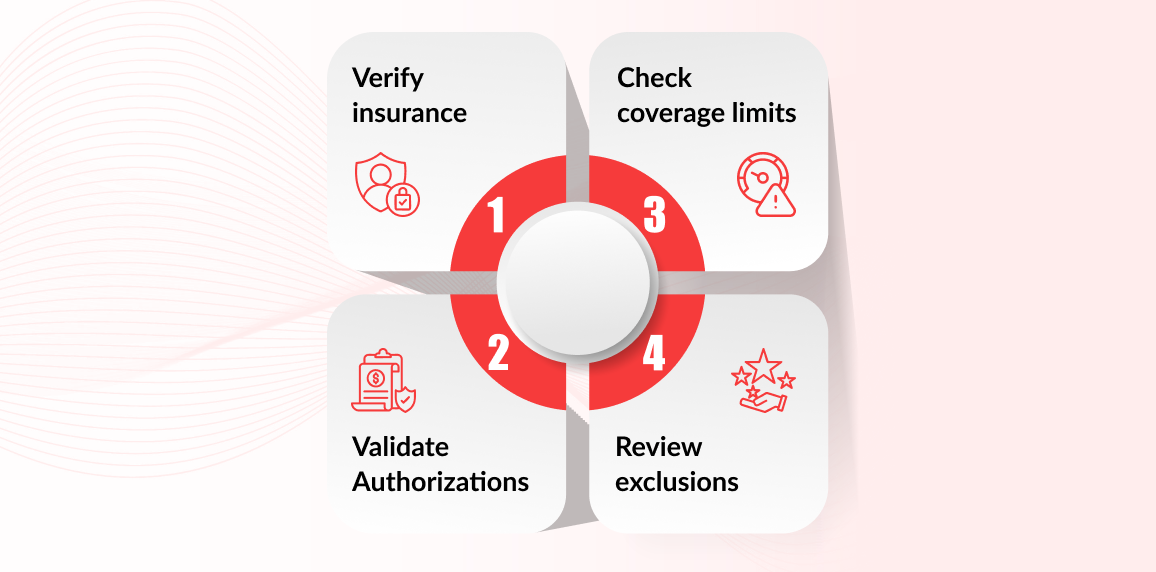
Verification of the patient’s eligibility and benefits before delivering any healthcare services is necessary to prevent denials. Eligibility issues are the most significant preventable source of claim denials and account for approximately 25% of all healthcare practice denials.

In order to limit this issue, providers need to verify patient coverage prior to delivering any services. For verifying eligibility for patients, this process should include: verifying the patient’s active insurance, reviewing the plan-specific coverage limitations, validating copayments, deductibles, prior authorizations, and checking for any exclusions that may impact how much they will be reimbursed by their respective health plan.

Performing real-time patient eligibility verification enables the practice to receive accurate financial and insurance coverage information upfront, thus eliminating unnecessary claim rejections and delays in payment.

Keep Patient Data Accurate and Complete

Entering incorrect simple demographic information can cost practices thousands of dollars per year. Accurate patient data is necessary to prevent claim denials. It is preferable to verify all entries in regards to patients’ names, DOB, insurance IDs, mailing addresses, and referring doctors before submitting claims.

Claim denials can be managed properly by putting the correct first, last names, and digits. Doing this will simplify payment. For reducing claims denials, use the Electronic Health Record EHR’s automatic alerts that can indicate incomplete or inconsistent fields prior to submitting your claim, ensuring each claim is correct and complete before submission.

Improve Documentation and Coding Accuracy

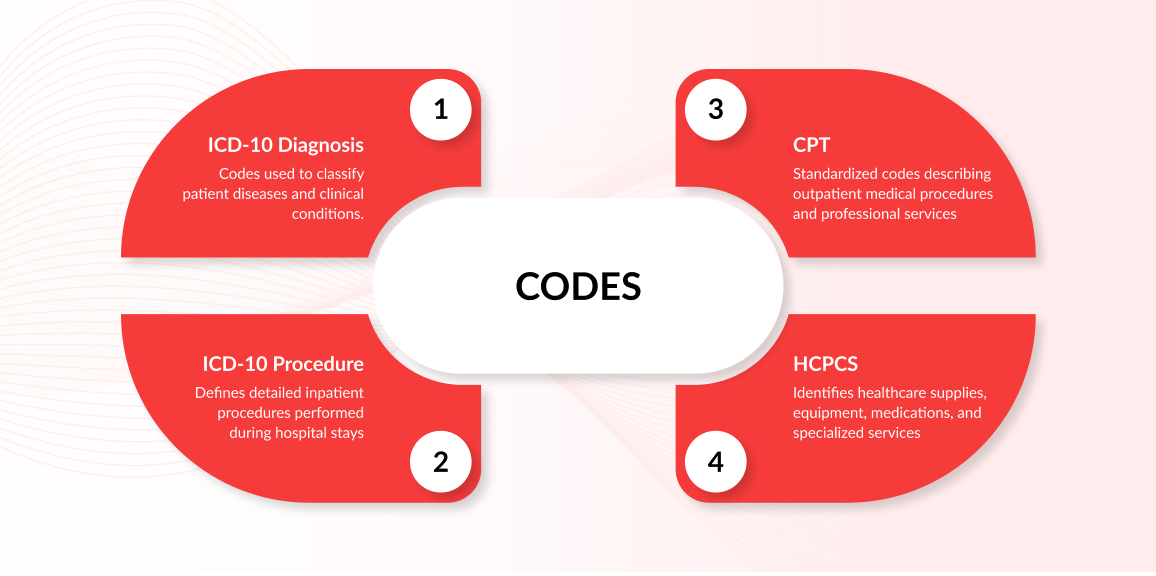
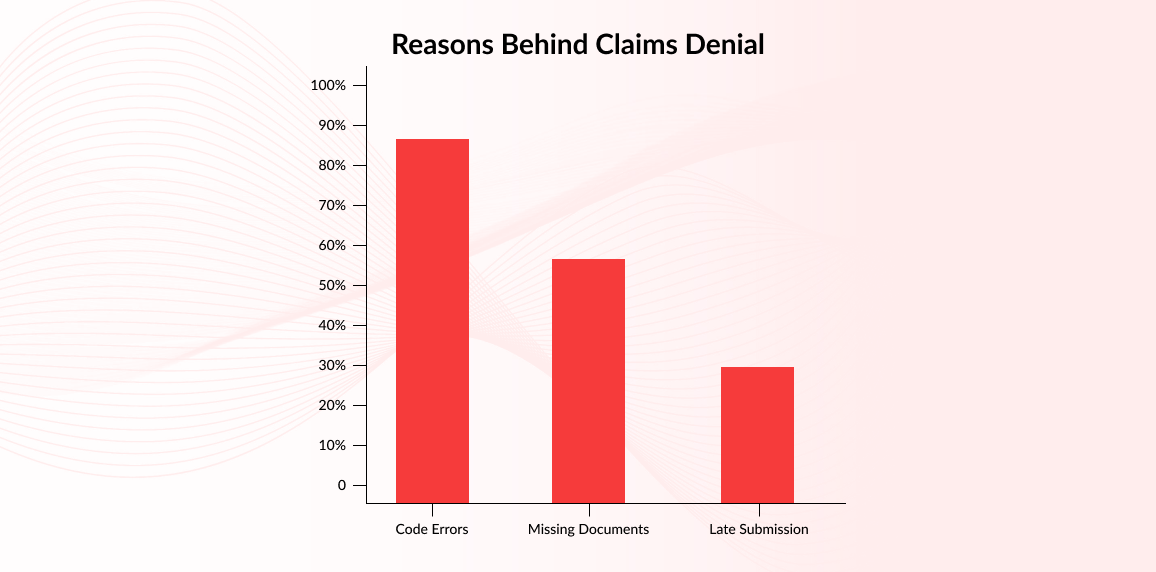
Coding-related denials are one of the most preventable causes of lost revenue in medical billing. While code matching, the use of the correct ICD-10, CPT, HCPCS, and modifiers is critical for the prevention of claim denials. Claims denial can be minimized through documenting the medical necessity of the procedure, keeping codes current for newly added procedures, and avoiding upcoding or undercoding.

Coding accurately, with proper documentation, will help reduce the number of claim rejections and expedite your ability to receive payment, leading to improved denial management process in medical billing.

The following table shows common code errors, impacts of wrong coding on medical billing, and the preventive measures as well:

Common Coding Errors & Prevention

Common Issue Impact Prevention
Incorrect modifier Service considered invalid Use CMS modifier guidelines
Missing diagnosis linkage Claim rejected for “medical necessity” Cross-check ICD-10–CPT mapping
Outdated codes Claim automatically denied Regular coding audits

Implement Pre-Authorization Workflows

Missing pre-approval authorization is also a contributory factor (almost 12–15%) in medical billing denials. Implementing pre-authorization workflows can help reduce claims denial by simplifying and streamlining billing. To prepare for pre-authorizations, create standard operating procedures for pre-authorization requests, and set up a process for keeping track of authorization numbers. Utilize automated notification systems to alert you when documentation is missing, to prevent claim submissions.

An example of medical services that require pre-authorizations is MRIs and CT scans; claims for these services will be denied immediately—even if the service is deemed medically necessary—if pre-authorization has not been obtained ahead of time. By establishing workflows for pre-authorizations, the medical practice can improve its revenue cycle and eliminate delays.

Conduct Regular Denial Trend Analysis

One of the key components of denial management is exploring and analyzing the reasons, impacts of claim denial. Identifying trends on the highest denial codes by payor, the types of denials seen in the hospitals’ departments, and the average turnaround time for appeals will help to reveal the systemic issues.

From these insights, targeted corrective actions can be developed to eliminate the root causes of future denials, streamline workflows, and optimize the revenue cycle. For example, if a payor tends to deny claims based on missing documentation, error mismatch, or any other factor, creating a dedicated checklist for that particular payor can significantly reduce the number of denials.

Strengthen Staff Training and SOPs

The number of claim denials is also increased by poor staff training. Consistent and uninterrupted staff training is coupled with appropriate Standard Operating Procedures (SOPs) that have been continuously documented, permitting personnel to work faster and more consistently, resulting in decreased denials, better performance of your team and improved revenue cycle by reducing inconsistencies and minimizing avoidable errors.

1. Building Coding Accuracy Through Training

As staff members participate in regular training, they will be exposed to new codes that were added to CPT, ICD-10, and HCPCS as well as changes to payer rules that have occurred more frequently. Consequently, staff members will have the ability to code a claim accurately without the need to go back and fix it. When you are in compliance with payer coding requirements and can correctly code claims, it will reduce the number of claims denied for coding errors, support compliance, and create accurate representations of your patient’s clinical condition.

2. Standardizing Documentation and Charge Capture

It is important that every team member document patient encounters and enter charges in the same manner. By having SOPs in place for the preparation of documentation, charge entry, and claims submission, your team will minimize variability in the way documentation is entered and the way charges are submitted. By having SOPs, your team will create a consistent, structured way to document and enter charges, thus helping them to be better prepared for audits and improving the accuracy of what is being documented and billed.

3. Enhancing Workflow Efficiency

With clearly defined workflows, employees spend less time trying to fix their mistakes and, as a result, are able to complete their duties in a shorter amount of time. By having clearly defined roles and employing streamlined processes, teams can efficiently and consistently evolve claims through the entire claim process with fewer delays.

Adopt Automated Denial Prevention & Follow-Up Tools

Automated denial prevention and follow-up tools allow for faster and more accurate follow-up, thereby reducing the incidence of manual errors and speeding up claim follow-up. For example, complex revenue cycle management (RCM) systems can identify missing or incorrect data before final submission. It automatically assesses claims compliance to payer guidelines, tracks, and manages denials within minutes of submission. It then automatically generates dashboards that show denial trends. With the help of automated RCM processes, you can experience a reduction in claims denials by 20-35% on average.

For instance, an AI-based claim scrubber could detect any discrepancies between an ICD-10 code and corresponding CPT code, preventing a claim from being denied due to lack of medical necessity and allowing for quicker payments. Automating denial management in the medical billing process enables medical billing companies to increase their accuracy and improve efficiency in capturing revenue.

How Denial Prevention Impacts Your Financials

Having a strong denial prevention strategy not only helps reduce claims denial but also provides a safeguard for your practice’s financial viability. Every denied claim increases administrative burden and decreases cash flow due to delays in payment.

By eliminating the root cause of denials, healthcare businesses can enjoy better cash flow, faster revenue cycles, and less claim complexities. When claim submissions are clean on the first attempt, practices have an automated payment process that creates quicker payments, fewer charge-offs, and better long-term budgeting.

Conclusion

As previously indicated, reducing claim denials requires a proactive and strategic method to be successful. Utilizing tight eligibility verifications, enhanced documentation, accurate coding practices, and technology will enable medical practices to provide a positive cash flow and minimize lost revenue due to denied claims. A third-party professional medical billing service eliminates these concerns by ensuring claims are properly submitted, processed quickly, and collected in a timely fashion.

If you are looking for dedicated services to reduce claims, Onfinio offers the perfect set of strategies for denial management. Get started with Onfinio’s denial management services and reduce claim denials and revenue loss.

Explore Onfinio’s billing solutions:

Why Credentialing & Payor Enrollment Are Critical for New Practices

Introduction

If you want to make your medical practice competent, standardized, and compliant, you must go through credentialing and payor enrollment with all payors. This process enables them to appropriate you in their database so that you can get paid for your services.

Credentialing & payor enrollment are essential for a practice to operate successfully. It streamlines the payment process and establishes strong coordination between practitioners and payors. However, if a provider is not credentialed, it will experience delayed or no payment for its claims, frequent denials of the claims submitted to the payor, and restricted access to patients due to the dysconnectivity with a payor’s network.

In this blog, we’ll discuss the reasons why new practices should go through credentialing & payor enrollment. It also highlights the impact that these processes will have on reimbursement, revenue cycle, credibility, and patient access.

What Is Provider Credentialing?

Provider credentialing is the process of verifying a healthcare provider’s professional qualifications — including education, licenses, certifications, training, and work history — so they meet the standards required by hospitals and insurance payers. Once verified, providers can be trusted to offer care and bill insurers appropriately.

In simple terms, credentialing is like a background check that proves you are qualified to practice. It is a prerequisite for trust between payers, practices, and patients, and it helps ensure compliance with industry and regulatory standards.

What Is Payor Enrollment?

After credentialing comes payor enrollment — the process of officially registering providers with insurance companies, Medicare, Medicaid, and other payers so your practice can bill and be reimbursed for services. Successful enrollment establishes your practice as an in-network provider with each insurer.

Think of payor enrollment services as the administrative bridge that connects your practice to the insurance ecosystem. Without enrollment, providers can’t bill plans or receive payments for patient care.

Why Credentialing & Payor Enrollment Are Critical for New Practices

1. Strengthening Provider Credibility

Credentialing confirms a provider’s qualification and allows providers to build relationships of trust with their clients and with insurers regarding their level of expertise. By performing proper enrollment into insurance networks, providers legitimize their practice, establish their practice as a recognized and compliant entity within those payer networks, and ultimately earn the respect of clients and insurers.

2. Ensuring Regulatory Compliance & Risk Management

Both credentialing and enrollment will assist providers in getting compliance and managing the risk of violations with all requirements of their state, federal, and payer regulations. For example, a U.S.-based practice is necessarily required to attain HIPAA compliance for smooth and standardized operations. The processes will minimize financial, legal, and operational risks for a practice because both credentialing and enrollment processes ensure that the information submitted from the provider is accurate, verified, and kept up-to-date on a regular basis.

3. Enabling Eligibility for Reimbursement

In addition to it, the credentialing and enrollment process will enable providers to receive their payments quickly. In most cases, the failure to attain either credentialing or enrollment will cause most to have their claims denied or rejected. Therefore, this process helps avoid disrupting cash flows and payment delays by ensuring eligibility.

4. Expanding Patient Access & Network Participation

By getting enrolled in multiple insurance networks, providers get a chance to gain more visibility and accessibility for patients. The credentialing process provides verification of the quality of a provider, which, in turn, allows insurers to list a provider’s name on their directories and/or approved provider panels. This process not only helps providers to enhance their reach but also enables patients’ trust.

5. Enhancing Financial Performance & Cash Flows

When you have clean claims and you avoid claim denials through the use of credentialing/enrolling processes, it allows your practice to get improved revenue cycles. Well-credentialed and enrolled providers will be able to receive faster approvals, better reimbursement rates, and ultimately be financially viable over time.

6. Ensuring Patient Safety & Quality Standards

Credentialing is conducted to ensure providers are properly trained, licensed, and qualified, and they protect patients. Additionally, getting enrolled in reputable insurance companies shows proof of working under the terms and conditions of the insurance company. It also assures that the providers will adhere to the high clinical and ethical standards expected from healthcare networks.

7. Improving Overall Revenue Cycle Management

Accurate credentialing and timely enrollment of providers will create fewer administrative delays, decrease payer rejections, and ensure effective claims submissions. This leads to a complete solidifying of the revenue cycle, which begins with eligibility checks and ends with reimbursement posting.

Conclusion

For any new practice, credentialing and payor enrollment are not optional steps — they are critical building blocks that allow you to participate in insurance networks, attract patients, and receive timely reimbursements. By understanding these processes and investing in professional support, you give your practice the best chance to thrive from day one.

If you have started a new practice and want to attain credentialing and enrollment for your practice, Onfinio offers you the best credentialing & payor enrollment services, ensuring successful reimbursement, improved revenue cycle, and enhanced credibility for your practice.

Explore Onfinio’s billing solutions:

The Complete Guide to Ophthalmology Medical Billing

Introduction

Ophthalmology is a highly complex and technologically advanced area of healthcare, especially in the billing context. Whether it is a diagnostic test, a medical eye exam, a surgical procedure, or post-operative care, each service must be coded, documented, and billed correctly. If there is one error during billing, there could be a delay in payment, a denial of claim, or even loss of revenue.

This Ophthalmology Medical Billing guide presents a straightforward and practical overview of ophthalmology medical billing services, distinguished features, and how specialized billing support can improve the financial viability of eye-care practices.

Understanding Ophthalmology Medical Billing

Ophthalmology medical billing is the process of translating eye-care services into standardized medical codes, submitting claims to payers, and managing reimbursements throughout the revenue cycle.

What makes this specialty unique is its overlap between medical treatment and vision care, combined with a high volume of diagnostic testing and surgical interventions.

While Billing for Ophthalmology:

– You must demonstrate that medical necessity for eye-related conditions is important

– There are limits to how many times a given test can be done

– There are various requirements for the timing of when the test can be billed

– Each payer may provide different standardized documentation

Due to the higher complexity of Ophthalmology billing compared to traditional medical billing, the success ratio in Ophthalmology billing is greater than that of traditional medical billing.

Primary Ophthalmology CPT Code Categories

Category Name Code Description
Eye Exam Codes Comprehensive eye exams
Diagnostic Testing Advanced eye diagnostics
Procedures and Surgeries Surgical eye treatments

Why is Billing for Ophthalmology More Complicated?

Although the majority of ophthalmology practices have large volumes of patients, they fail to remain profitable due to inefficiencies in their billing practices. In fact, most ophthalmology practices do not have an adequate volume of billing activity, but rather have well-established policies and procedures for billing.

The following are examples of the more typical challenges faced by Ophthalmology billing:

1. Medical vs. Vision Insurance Cross-Over Confusion

Ophthalmology billing can be either billed under medical or vision insurance or both. Therefore, it is very common for practitioners to either incorrectly file a claim with the wrong payer or file a claim with both payers simultaneously.

2. Limited Understanding of Diagnostic Testing

Some of the Ophthalmology diagnostic tests, such as Optical Coherence Tomography (OCT) and Visual Fields (VF), require specific diagnostic codes that many ophthalmologists do not have enough understanding of how to use. This also causes confusion and delays in processing claims.

3. Complex Surgical Billing

Cataract surgery, glaucoma procedures, and retinal injections all require correct usage for global periods, modifiers, and post-operative billing.

4. Frequent Regulatory Updates

Coding Guidelines (ICD-10-CM), payer policies, and reimbursement guidelines are continually changing, so the ophthalmology practice must have a coding expert available on a continual basis for compliance.

Because of these issues, medical billing services for Ophthalmology are not an option but a necessity for most practices.

What Do Ophthalmology Medical Billing Services Include?

This type of billing service provides complete management of every aspect of the revenue cycle, ensuring complete accuracy, compliance with government regulations, and continual cash flow.

Complete Revenue Cycle Management

Billing service staff will oversee all phases of your billing process from initial patient registration to final payment reconciliation. By doing so, your practice may reduce delays and/or loss of revenue due to incorrect billing procedures.

Specialty-Specific Coding Accuracy

To ensure accurate coding based on CPT, ICD-10, and modifier combinations for your specialty, your billing service will assign the correct codes. Each bill will contain the same codes that your practice submits to the various payers.

Eligibility & Benefit Verification

By verifying eligibility and benefits with your practice before services are delivered, patients will reduce their disputing of services rendered, and the collection rate will increase.

Denial Analysis & Revenue Recovery

Once a claim has been denied, it will be reviewed, corrected, and resubmitted to the payer as quickly as possible. Denied claims give you the ability to see and understand trends and to create a plan that can prevent similar denied claims from occurring.

Compliance & Audit Readiness

As long as documentation and coding match properly and accurately, your practice can reduce the risk of being audited, fined, or found non-compliant.

Real-World Examples of Ophthalmology Billing

These are examples of how ophthalmology practices have billed for services:

Example 1: Comprehensive Eye Exam

A patient presents with a complaint of blurred vision. The provider conducts a comprehensive eye examination and bills the appropriate CPT code with a medical necessity provided by a diagnosis.

Example 2: Diagnostic Imaging (OCT)

The practice performed a test utilizing optical coherence tomography (OCT) for the purpose of monitoring the patient’s glaucoma progression (in this example). The practice built a medical necessity justification for the service and submitted appropriate documentation to support the medical necessity of performing the OCT (to help prevent payers from denying this claim) and documenting the results of OCT for medical necessity.

Example 3: Cataract Surgery Billing

The patient has undergone cataract extraction and the procedure was billed appropriately using the appropriate CPT code(s), appropriate modifiers, and in accordance with global period rules in order to receive full and accurate reimbursement.

How Specialized Billing Improves Practice Performance

Overall, specialized ophthalmic medical billing services help improve the revenue cycle by providing measurable benefits beyond the typical submission of claims to payers.

Improved Cash Flow

<pid=”bg1″>When claim errors are reduced, clean claims produce faster payments, which will lead to predictable revenue, allowing for better financial planning.

Decreased Operational Burdens

By outsourcing administrative duties related to submitting claims, staff members will not be burdened with a large volume of administrative duties and will be able to spend more time providing quality care to patients and improving patient satisfaction.

Lower Denial Rates

Additionally, specialized expertise reduces the potential for errors associated with modifiers, documentation gaps, and compliance with payer policies.

Grow Your Practice

The Practice can grow or open new locations without having to hire additional administrative support or create added stress on the staff.

Choosing the Right Ophthalmology Billing Partner

When selecting a billing partner, ophthalmology practices should prioritize:

  • Proven experience in ophthalmology billing
  • Transparent reporting and performance metrics
  • Strong denial management capabilities
  • Compliance-focused workflows
  • Scalable services aligned with practice growth

A billing partner should function as a revenue ally, not just a claims processor.

Final Thoughts

Ophthalmology practices operate at the intersection of precision medicine and complex reimbursement models. Without expert billing support, even the most successful clinics can experience revenue loss and administrative strain.

Investing in professional ophthalmology medical billing services transforms billing from a reactive task into a strategic asset — improving cash flow, reducing risk, and supporting long-term growth.

For eye care providers aiming to stay financially strong in a competitive healthcare environment, specialized billing expertise is no longer optional — it’s essential.

If you want to improve ophthalmological medical billing and enhance quality and revenue, Onfinio is the best choice for you. Its ophthalmological medical billing services are driven by quality, excellence, and standardized services.